There are many historic churches throughout the Cotswolds. Almost every village will have an ancient parish church many with origins dating back to the 12th century or earlier. Each has its own history, stories and character, offering a glimpse into village life over the centuries.
Why are Cotswold churches so impressive?
The medieval wool trade brought considerable wealth to the Cotswolds. Merchants helped fund ambitious churches whose scale and craftsmanship still stand out against the surrounding towns and villages. Wealthy wool merchants beleived that the more they spent on the Church, the easier their passage to Heaven would be! St James’ in Chipping Campden is a particularly good example. Its architecture and surviving medieval textiles offer a glimpse of the prosperity and skill of the period. These buildings make much more sense when you connect them with the wool merchants, markets and countryside around them.
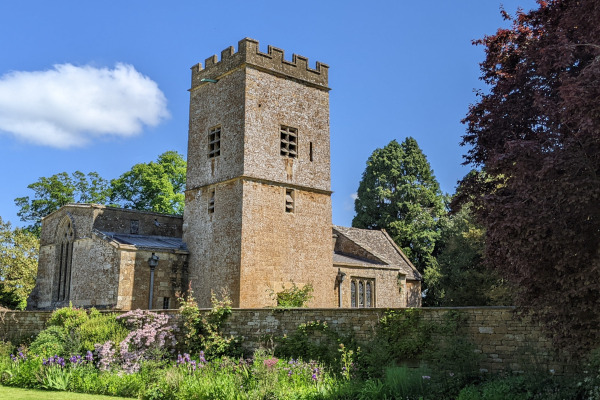
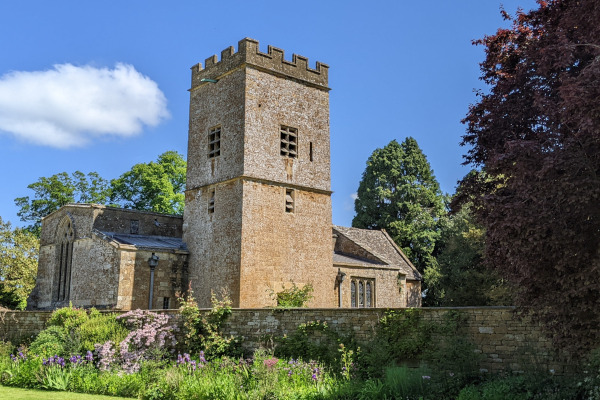
St Mary the Virgin, Chastleton
01 · A quieter village church
St Mary’s, Chastleton
Beside Chastleton House, this small church makes a lovely contrast to the grander wool churches. It stands in Oxfordshire, close to the Gloucestershire border, and parts of the building date from the 12th century. The tower was added later, so the church is a useful reminder that buildings like these developed over many generations. Inside, look for surviving medieval wall tiles and traces of wall paintings.
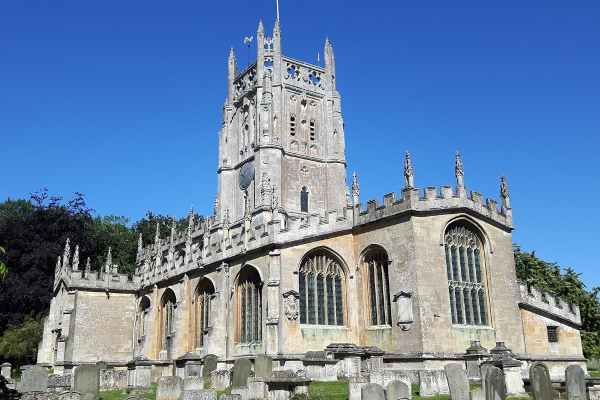
St Mary’s, Fairford
02 · Extraordinary medieval glass
St Mary’s, Fairford
Fairford deserves a visit for its stained glass alone. Its 28 windows form the only complete set of late medieval stained-glass windows surviving in an English parish church. The present church was built in the late Perpendicular Gothic style during the 1490s. The windows followed between about 1500 and 1515, creating an extraordinary scheme of biblical scenes, saints and symbolism. Allow time to study a few windows properly. The small details can be just as absorbing as the overall colour and scale.
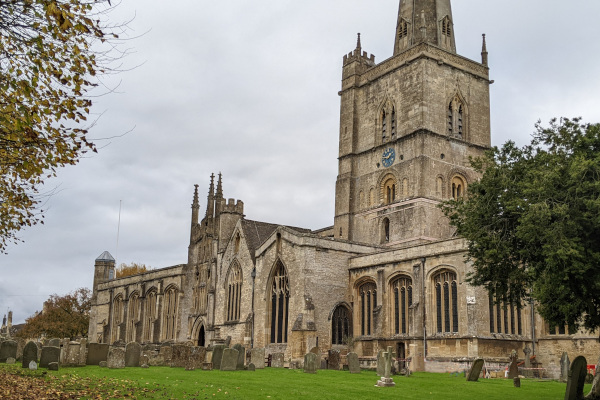
St John the Baptist, Burford
03 · Wool wealth and Civil War history
St John the Baptist, Burford
A short walk from Burford’s High Street brings you to a church with a striking mixture of architectural periods. Building work began in the 12th century, with much of what you see today completed during the 15th. In 1649, mutinous soldiers associated with the Levellers were imprisoned here. A prisoner’s inscription dated 1649 survives on the lead lining of the font, bringing that episode unexpectedly close. The church rewards a slow look around: seek out the monuments, the west doorway and the surviving detail that links the building to Burford’s long history.
Peter’s Tour Notes
A church visit can fit naturally into a day of villages, countryside and a relaxed lunch. Tell me if churches, local history or stained glass particularly interest you, and we can shape a route around them.